A dedicated brief on each business I’ve founded, run, or led. Use the menu above to jump between them.
Electronic mentalism. At the intersection of Arthur C. Clarke’s advanced technology and pure magic — engineering the impossible for the world’s most demanding performers.
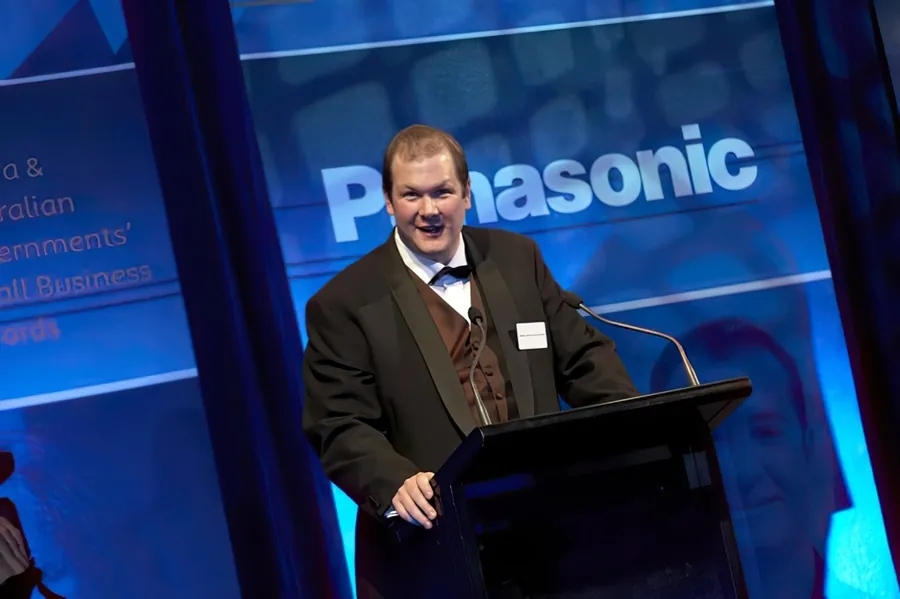
Illuminati Magic exists because of a David Blaine television clip. After CommtechWireless sold in 2008, I came back to Perth with two small children and time on my hands for the first time in twenty years. I saw Blaine perform “card to impossible location” on Harrison Ford — Ford’s reaction wouldn’t leave me — and I started buying tricks to entertain Ethan. I joined the Academy of Magical Arts at the Magic Castle. By 2017 it was obvious there was a platform missing — the engineering, firmware and software infrastructure that working professional magicians needed and that nobody else was going to build. So I built it. The business sits where my career has always sat — the seam between hardware, firmware and software — and the customer is the person on stage who cannot afford a method to fail in front of two hundred people.
The principle — one consolidated architecture, designed for the seam between the performer and the audience — is the same one that ran through every business I’ve built since 1992: the right information, to the right person, at the right moment. The customers are different. The architecture is the same.
Out of respect for the performers who rely on the work, the products, methods and platforms are not discussed in public. The discipline of method-secrecy is itself a craft.
The company operates as a properly distributed business — a Perth head office, engineering teams in India, partner relationships across Europe and the United States, and a roster of professional consultants and performers who feed the R&D pipeline. We supply some of the world’s leading mentalists, with new performers onboarded continuously and an active customer-support and training operation behind every line of work.
This is also — deliberately — the last business I expect to be running. Magic, taken seriously, is the closest art I know to engineering. R&D on a new effect is structurally identical to R&D on a piece of medical-grade firmware: you iterate, you instrument, you watch what the audience does with their eyes, and you tighten the seam until the seam disappears. The horizon is indefinite. Whether Ethan or Lachlan ever want it is for them to decide; the business is being built so it doesn’t depend on the answer.
Professional memberships

A boutique family office, founded in 2011 to do, with my own money, the kind of investing I’d wanted done for me twenty years earlier.
Allure Capital is a boutique family-office investment firm. The preference is for healthcare-software, medical-device, and clinical-technology businesses with capable management, a platform already running at live sites, and a credible path to exit within thirty-six months. Seven criteria, all non-negotiable. Roughly a hundred proposals reviewed since founding.
The portfolio splits cleanly into two halves — active engagements where I sit on the board or take a meaningful advisory role, and passive holdings where I’m a shareholder full stop. Both are detailed on the Active Investments and Passive Portfolio pages.
Past engagements include Azure Healthcare / Austco (10% stake, 12× exit, 2012–14), Alcidion (the RTO, ~6% at listing, exited), ResApp Health (NED, Pfizer A$179m exit 2022), and the Omnitronics return-engagement sale on behalf of shareholders. The current active list is short: Allure Capital itself, Illuminati Magic, and Halo Medical Devices.
Portfolio companies · active engagements


A thirty-second cough. A smartphone microphone. A clinical-grade respiratory diagnosis. Acquired by Pfizer in August 2022 for AUD $180m.
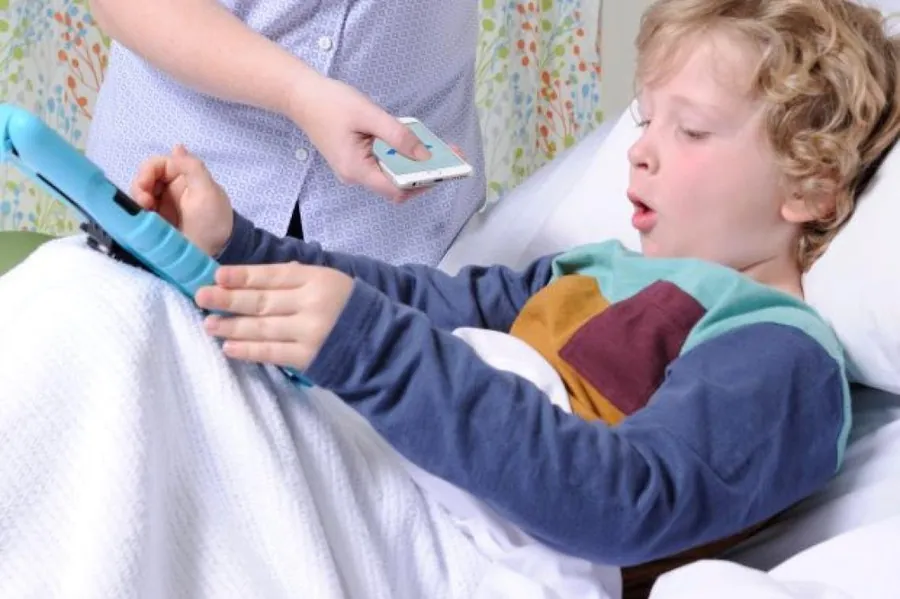
ResApp Health was built around technology developed by Associate Professor Udantha Abeyratne and his team at the University of Queensland’s School of Information Technology and Electrical Engineering — research originally funded by the Bill & Melinda Gates Foundation and licensed to ResApp by UQ’s commercialisation arm UniQuest in September 2014. The core model listens to thirty seconds of a patient’s cough recorded by an ordinary smartphone microphone — and tells you, with clinical-grade accuracy, what’s wrong with their respiratory system. Asthma. Pneumonia. Croup. Bronchiolitis. COPD. No spirometer. No accessory. No hardware beyond a phone they already own.
I joined the board as Non-Executive Director in December 2017, alongside co-founder Brian Leedman and CEO Tony Keating. It was the first company I’d worked with where the core IP was not architecture or workflow but an algorithm — a model trained on tens of thousands of labelled audio samples. The products were ResAppDx (paediatric respiratory diagnosis, regulatory-cleared in Europe with a CE Mark and approved by Australia’s Therapeutic Goods Administration) and SleepCheckRx (prescription consumer sleep-apnoea screening).
In April 2022, Pfizer announced an intention to acquire ResApp at A$0.115 per share. After strong COVID-19 cough-detection results came out of the diligence period — a pilot study of 741 patients across the US and India, including 446 confirmed positives, returning 92% sensitivity from cough alone — the scheme consideration was revised upward, first to A$0.146, then to a final A$0.208 per share, valuing ResApp at approximately AUD $179 million (US$116 million). The final price was a 131.1% premium to the closing share price the day before the original announcement.
The scheme meeting was held on 7 September 2022. 83% of shareholders voted in favour — safely above the 75% supermajority required. The scheme was implemented on 23 September 2022. ResApp became part of Pfizer Digital. For a twenty-person Brisbane company listening to coughs, it remains one of the most successful digital-health exits in Australian history.
A reverse takeover. A clinical decision-support platform. Three Western Health hospitals running Miya before the listing was approved.
Alcidion had been built quietly in Adelaide over a decade by Professor Malcolm Pradhan (PhD Stanford, Medical Informatics) and Ray Blight (former CEO of the SA Health Commission). Their platform — Miya — was a clinical decision-support system that surfaced real-time risk to the clinicians who could act on it. Sepsis. Deterioration. Falls. The right information, to the right person, at the right moment. The thesis that had run through my career was sitting on the other side of the table with a working product and a customer list.
In August 2015 we announced a reverse takeover of Naracoota Resources Limited (ASX:NRR) to list Alcidion on the ASX. Allure Capital led the deal alongside BlueSky Private Equity (ASX:BLA) and Patersons Securities. The structure was $12m in initial scrip on completion, plus two further $4m tranches contingent on hitting $10m and $15m revenue. Alcidion was deployed live at Western Health hospitals in Footscray, Sunshine, and Williamstown before the listing was complete.
The reverse listing completed in December 2015. Alcidion has traded as ALC on the ASX ever since. I served as Executive Director through 2017, when I stepped down. I have since divested the position entirely — resigning as director and selling my shares — though the platform’s subsequent global trajectory under Kate Quirke’s leadership has been remarkable.
The Miya platform has gone on to become a global concern. As of 2026, Alcidion runs across 400+ hospitals, supporting 50,000+ beds and 130,000 active users in Australia, New Zealand, and the United Kingdom. Landmark UK NHS contracts include South Tees Hospitals (A$9.5m, the largest Miya Precision deal at execution), University Hospitals Sussex (multi-year EPR, January 2026), North Cumbria Integrated Care (10-year contract, 2025), and continuing rollouts at Alfred Health in Melbourne. Through subsequent acquisitions of Patientrack (2018), MKM Health (2019), ExtraMed and Silverlink (2021), and most recently Telstra Health Kyra (2026), the company has consolidated as Australia's flagship clinical-informatics business.
“This has skyrocketed the efficiency in patient care as well as the safety.”
Professor Tissa Wijerante · Consulting Neurologist · Director of the Stroke & Neuroscience Unit, Western Health
Hospital deployments · Miya Precision platform
A $5,200 shed in Mosman Park. Sixteen years later: 53 countries, 8,000+ sites, and a GFC trade sale.
I founded CommtechWireless in 1992 as a partnership called Commtech Paging Systems. The starting capital was twenty-four thousand dollars saved while I was still at Austco. After a photocopier, two PCs and a print run of brochures, the bank balance was down to about five thousand two hundred. I figured that would last twelve months at one hundred dollars a week. The office was a nine-square-metre shed behind a friend’s house in Mosman Park — in the peak of summer it hit forty-five degrees by the middle of the day. My brother Mike charged me fifty dollars a week board; I lived on the other fifty.
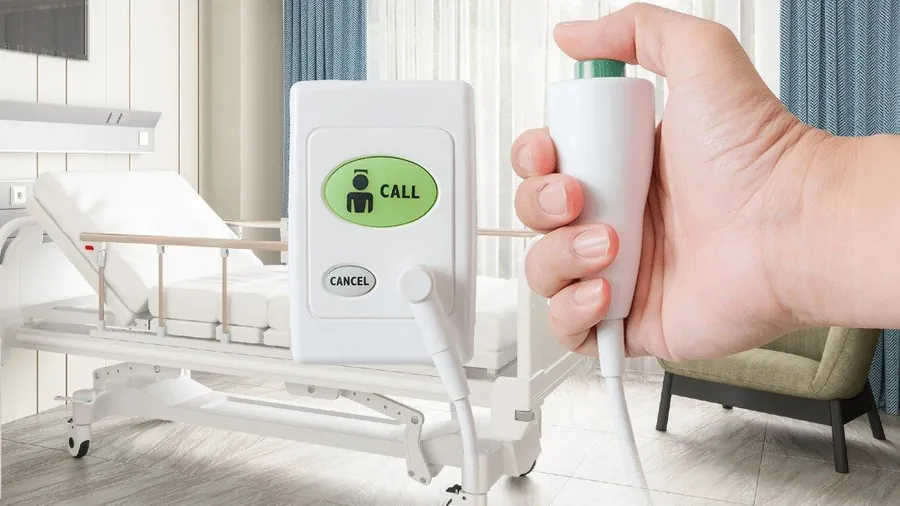
The thesis was simple. Hospitals had nurse-call systems, patient-monitoring systems, fire-alarm systems and security systems — and none of them spoke to each other or to the staff who needed the information. Casinos had the same problem with slot-machine alerts, surveillance, and incident response. We built the middleware. After twelve months of hundred-hour weeks we launched BASEPage in 1995 — the world’s first PC-based wireless-messaging platform — and the first sale was to Telecom New Zealand. Inside a year, every public hospital in New Zealand was running it.
The company was incorporated in 1994, renamed CommtechWireless in 1999, and won an AusIndustry R&D Start Grant of $1.6m in 1998 to fund the development of BASEPage2000. Zane Lewis joined in 1996 and would later open the Florida office in 2001. By 2002, Zane and I had established Keteli (Hong Kong), taking a fifty-percent stake in China-based electronics manufacturer K2 Wireless.
By the time of the trade sale, the platform was running in 53 countries across approximately 8,000 customer sites, with offices in Perth, Sydney, Jacksonville, Boca Raton, Hong Kong, Shenzhen, Vejle (Denmark), and London. Headline customers: Mayo Clinic, Cleveland Clinic, Saudi Ministry of Health, Wynn Macau, the US Army / Navy / Air Force, the NSW Rural Fire Service, Erie County Homeland Security (PA), FAO Schwarz New York, TGI Fridays Utah, Bumrungrad Hospital Thailand (the largest in the Southern Hemisphere) — and a duress platform for the President of the United States, used through the Bush administration.
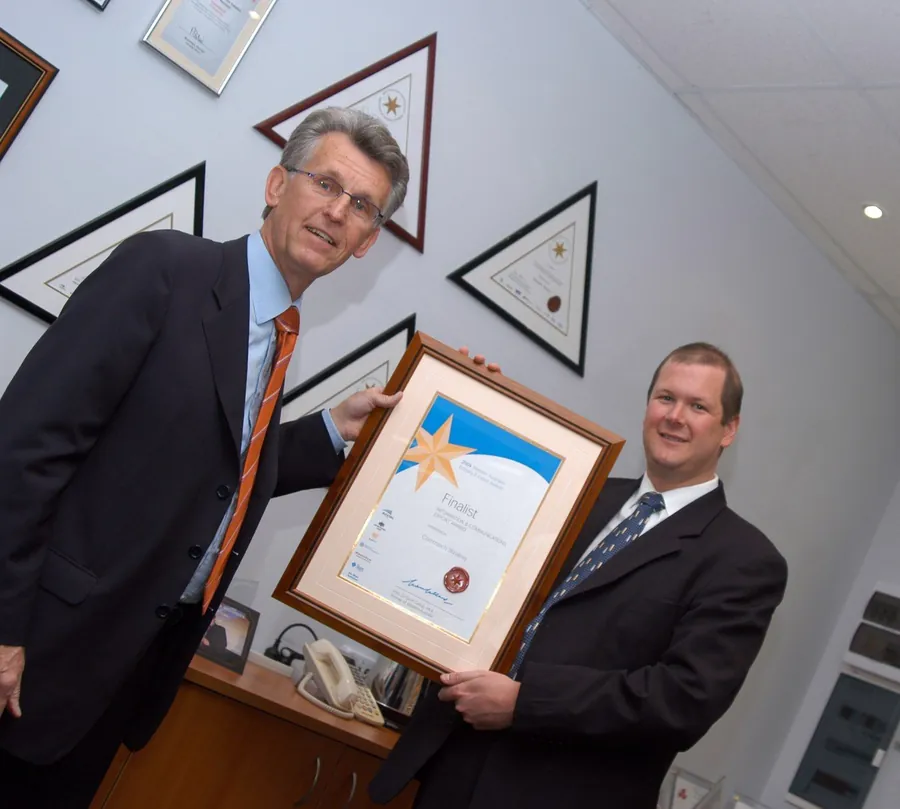
In October 2008 — three weeks into the global financial crisis, with twenty-two investment banks newly underwater — we sold the business to Amcom Software in a deal funded by the Canadian Imperial Bank of Commerce. The cheque didn’t bounce. I stayed on as General Manager for the eighteen months post-acquisition. In 2011, Amcom was rolled into USA Mobility (now Spok) for AUD $163.8m.
A few of the names that ran the platform
Eight of approximately eight thousand customer sites, across fifty-three countries, at exit.
From the archive
A quarterly newsletter we sent to the dealer network and customer base from the mid-2000s through to acquisition — case studies, product launches, dealer recognitions. Two issues from 2006 are preserved here: Q3 covers the Montecasino BASEPage rollout, the Birmingham City Council learning-centre deployment, Alliance Community Hospital, Epworth Hospital’s Philips integration, and the CommtechMessenger preview. Q4 covers the NSW SES rescue from carrier fees (sharing the NSW RFS transmitter network), the Delaware Hospital five-second-response deployment, P&O Ports’ lighting telemetry, and the Bravo EX ATEX-certified pager launch.
Three earlier ventures
1990 – 1994 · Perth · R&D Manager & Director
Stint one (1990–1992): I joined Austco at nineteen as R&D Manager — the youngest person in the building. My mentor was Bob Grey, the company’s founder, who told me on day one that R&D did not stand for “Research and Development” but for “Replicate and Duplicate.” What he actually taught me was the difference between code that ran in the office and code that ran in a hospital ward at three in the morning. CallGuard, CellGuard and Medicom were the products of those years.
Stint two (2012–2014): Twenty years later, with Austco sitting inside Azure Healthcare (ASX:AZV) at a share price of 3.3 cents, I underwrote the rights issue, became the second-largest shareholder, and rejoined as Vice President of Austco Communications. Bob Grey had also returned. Over thirty months the share price moved to ~34¢ — a 1,200% return — before I exited in April 2014. “It was only once Buzza (and founder Robert Grey) both rejoined the company that its fortunes turned around,” Claude Walker wrote in Ethical Equities. It was the kind of line you save.
1988 – 1990 · Perth · Software engineer, aged 17
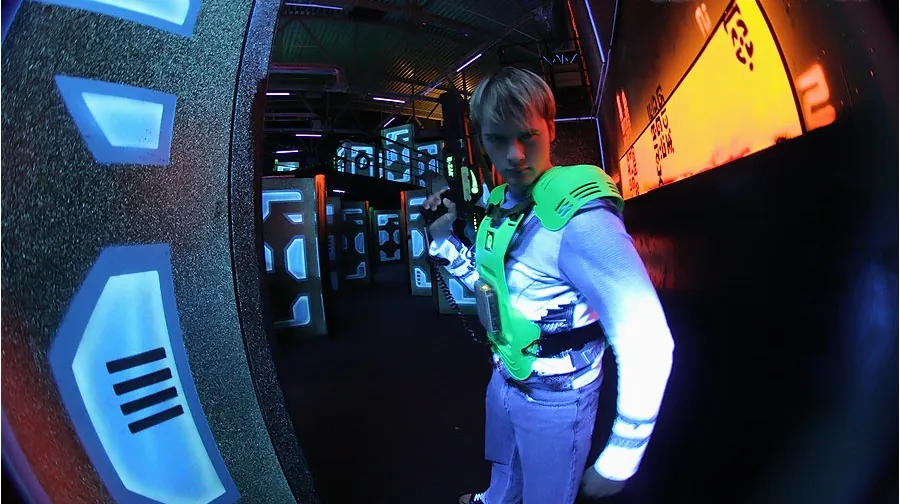
Stint one (1988–1990): I took a job at Omnitronics at seventeen — a Perth-based electronics design house. The owners were David Nicholson, Peter Lowe and Jim Wilcox. A local schoolteacher, Geoff Haselhurst, working with Peter Robertson, had approached the firm about building a life-sized laser-tag system for kids. I wrote the PC software in Turbo Pascal; Peter Lowe wrote the embedded firmware on the Motorola 6805 C8. I drew the original logo. The first Quasar Centre opened at 160 Beaufort Street, Northbridge on 1 June 1987.
In 1989 the internationally acclaimed Irish rock group U2, through their accountant Osmond Kilkenny as a director of LeisureCorp, acquired the Quasar business. The brand was renamed Q-Zar in 1992 following a Philips Magnavox trademark dispute, and went on under U2’s ownership to become one of the world’s most popular laser-tag franchises — with arenas across the UK, Ireland, North America, Europe and Australia. The Irish Times later confirmed the structure: “In its early days it was owned by Leisurecorp, whose directors included U2’s accountant, Mr Osmond Kilkenny.”
Stint two (return engagement): Decades later, the Omnitronics shareholders invited me back as a board advisor with a brief to find them an exit. I led the sale of the business successfully on their behalf — closing the loop on the place where I started.
1984 – 1986 · New Zealand · Founder, aged 14
My first company started in a hospital bed at Kings College in New Zealand, after an eight-hour operation for an astrocytoma in the motor section of my brain, followed by twelve weeks of radiotherapy. My father bought me a 1984 IBM PC at thirteen thousand dollars and twenty-four percent interest, and billed me on a payment plan — presenting it at the foot of my ICU bed with the quip, “You’re an unsecured minor fresh out of brain surgery, which puts you at a 24% interest bracket.” Philips Electronics New Zealand, new to the PC market and looking for software to bundle with the launch of their YES:PC, picked up a video game I wrote on a royalty deal: eleven dollars a copy to a fifteen-thousand-dollar cap. The cap was paid out inside a week.