The story

Forty years, more or less.

Eight companies, three exits, one Pfizer acquisition, and a 1984 IBM PC. The full chronology — in roughly the order it happened.

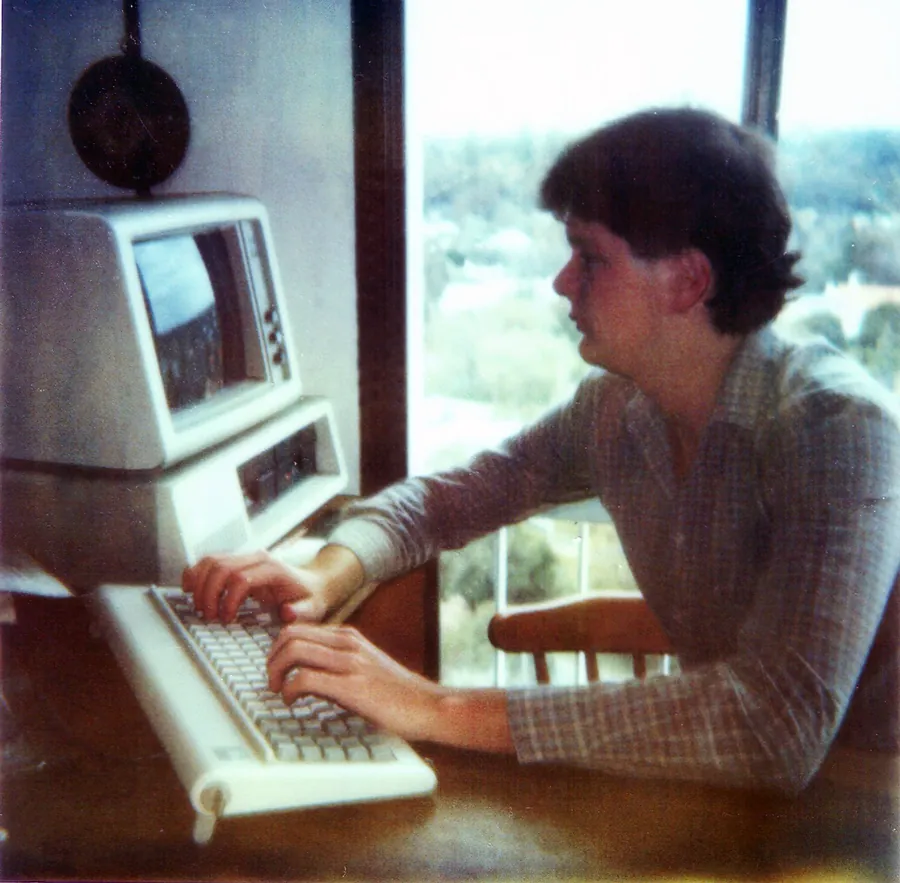
Nathan Buzza at fourteen, programming on the 1984 IBM PC his father bought him after brain surgery — the machine on which Data World began.
Helensville, New Zealand, 1984 — the IBM PC at the foot of an ICU bed; the start of everything.

Data World

A 1984 IBM PC, eight hours of brain surgery, and a debt to repay.

I was at Kings College in New Zealand — the family had moved there from the UK in 1977 for a deer farm at Helensville — when the seizures started. The first diagnosis was epilepsy; the second, after a battery of tests, was astrocytoma. A rare tumour on the motor section of my brain. Eight hours of surgery at fourteen. Twelve weeks of radiotherapy. Most of a year off school. My father — born in the goldfields of Kalgoorlie in 1934, orphaned at six when his policeman father was killed over thirty shillings, left school at thirteen to apprentice as a boilermaker, then built half the houses in Scarborough and a deer farm in New Zealand — bought me a 1984 IBM PC at thirteen thousand dollars and twenty-four percent interest, and billed me on a payment plan. He presented it at the foot of my ICU bed with the quip, “Well son, this PC set me back $13,000 — you’re an unsecured minor fresh out of brain surgery, which puts you at a 24% interest bracket.” He believed I should be doing something useful. So did I.

I taught myself to program. Philips Electronics New Zealand, just entering the personal-computer market and looking for software to bundle with the launch of their YES:PC, picked up a game I’d written on a royalty deal: eleven dollars a copy to a fifteen-thousand-dollar cap. The cap was paid out inside a week. The cheque cleared the IBM loan with a few weeks’ allowance to spare.

The two games at fourteen

Qubert came first; Q-Zar followed.

Wikipedia and the Laser Tag Museum both record that I developed Qubert and Q-Zar at fourteen. The arcade Q*bert released by Gottlieb in 1982 predates my 1984 IBM, so my Qubert was a clone in that lineage rather than the inspiration. The Q-Zar software, which I’d later professionalise at Omnitronics, is the one that genuinely went global.

The lesson from Data World, more than anything else, was that a problem — even one as steep as a hospital bed and a debt — could be turned into a piece of software. The principle has held up.

Q-Zar logo

Omnitronics & Q-Zar

Turbo Pascal, a Motorola 6805 C8, and a laser tag franchise that ate the world.

Between Scotch College and a Curtin commerce degree I would later abandon, I took a job at Omnitronics at seventeen. A Perth-based electronics design house owned by David Nicholson (Managing Director), Peter Lowe and Jim Wilcox (Directors) — three of the smartest people I’ve ever worked for. They took on a kid who knew BASIC, taught him electronics, and along the way taught him most of what he’d need to know about running a small technical business: spend on R&D, treat staff and customers as partners, stick to what you actually know. The wider team included Kevin Davies on electronics, Alan Parker on the commercial side, and Nigel Broadfoot on procurement.

A local Perth schoolteacher, Geoff Haselhurst, working alongside Peter Robertson, came to Omnitronics with the idea for a life-sized laser-tag system built for kids. I wrote the PC software in Turbo Pascal. Peter Lowe wrote the embedded firmware on the Motorola 6805 C8. The first Quasar Centre opened at 160 Beaufort Street, Northbridge on 1 June 1987. I drew the original logo. There was one early morning where I locked myself in a room with the prototype and smoked a packet of cigarettes just to check the lasers were actually functioning — the only way to see them was in the haze.

In 1989 the internationally acclaimed Irish rock group U2, through their accountant Osmond Kilkenny as a director of LeisureCorp, acquired the Quasar business. The brand was renamed Q-Zar in 1992 following a trademark dispute with Philips Magnavox — their consumer electronics brand was already called Quasar. Under U2’s ownership it scaled into one of the world’s most popular laser-tag franchises, with arenas across the UK, Ireland, North America, Europe and Australia. The Irish Times later confirmed the structure publicly: “In its early days it was owned by Leisurecorp, whose directors included U2’s accountant, Mr Osmond Kilkenny.” The Perth team watched the international rollout from a distance with what I can only describe as mixed feelings.

Twenty years later — long after CommtechWireless had sold and I’d come back to Perth — the Omnitronics shareholders invited me back as a board advisor. The brief was to help find them an exit. I led the sale of the business on their behalf, which closed successfully — closing the loop on the place where I’d started.

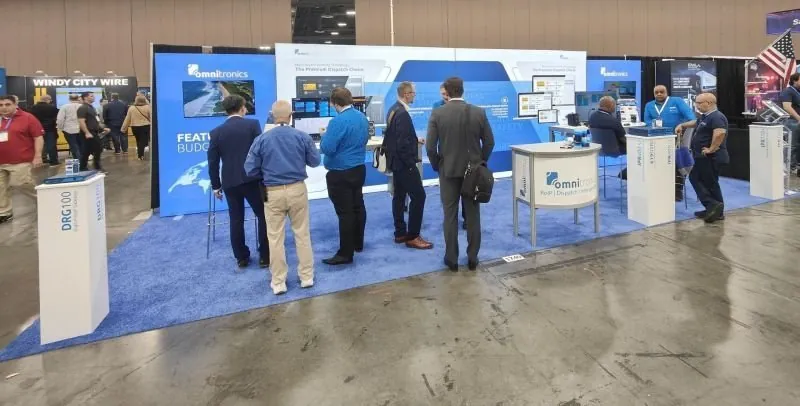
The Omnitronics trade-show booth at a North American industry expo — Dispatch Cloud, branded panels, customers in conversation.
Omnitronics today — a North American expo booth for the Dispatch Cloud platform. Forty years on from the Quasar prototype, the firm is still in the seam where I started.
Austco Healthcare logo

Austco Communications

CallGuard, CellGuard, Medicom — and the principle that software in a hospital ward is not a place for cleverness.

I joined Austco at nineteen as R&D Manager — almost certainly the youngest person in the building, and the only one who’d ever shipped a video game. Austco was Australia’s largest nurse-call manufacturer, with eight subsidiaries around the world. My mentor was Bob Grey, who taught me the difference between writing code that worked in the office and writing code that worked in a hospital ward at three in the morning.

The products I worked on were CallGuard (nurse-call), CellGuard (cellular communications), and Medicom (clinical paging). They were the first systems I’d built where lives were on the line and the only acceptable failure mode was no failure mode at all. The principle — that the seam between software and the clinician is a place for unblinking reliability, not for cleverness — has been the standard I’ve held every product to since.

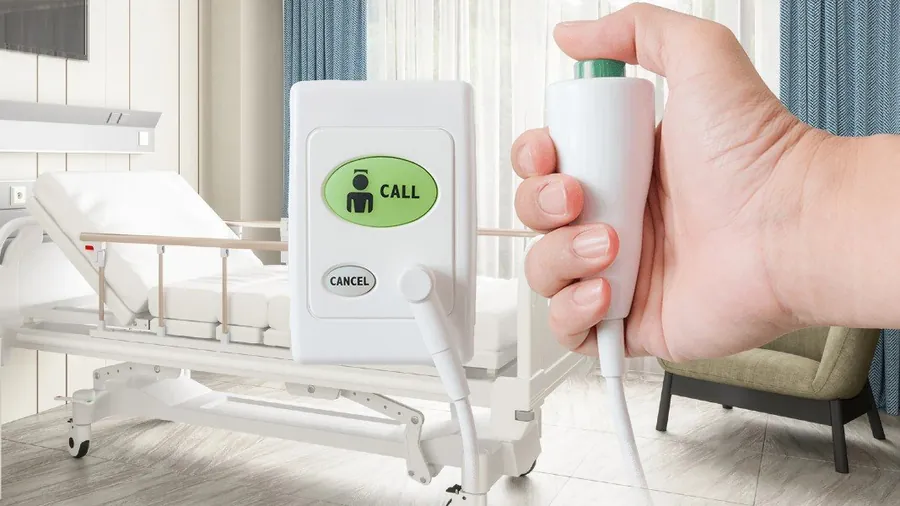
A modern Austco nurse-call station beside a hospital bed, with a patient pendant in the foreground.
An Austco nurse-call station on a hospital bedside — the lineage of CallGuard, CellGuard and Medicom is in current production at Austco today.
Austco Healthcare logo

Austco · the turnaround.

Twenty years on, the firm I’d started at as a teenager was drifting on the ASX at three cents. I underwrote the rights issue, rejoined the team, and helped Bob Grey turn it around.

By 2012, Austco was sitting inside Azure Healthcare Ltd (ASX:AZV) — the listed parent that owned both Austco and Sedco brands — and the share price was floating around 3.3 cents. Bob Grey, the man who’d hired me as a nineteen-year-old R&D Manager, had returned to lead the business. I underwrote the rights issue, became the second-largest shareholder with a 10% position, and joined Austco as Vice President of Austco Communications. The brief was simple: restructure, resite the manufacturing and R&D operations closer to the largest customers (the United States), and rebuild the cost line.

Two and a half years later the share price had moved through the mid-thirties — a 1,200% return over the holding period, roughly twelve times entry, and around AUD $100m of new shareholder value. I divested in April 2014 and moved onto Alcidion. The independent share-tipping site Ethical Equities published a piece the same week noting that “it was only once Buzza (and founder Robert Grey) both rejoined the company that its fortunes turned around.” Coming from a third party with no skin in the game, it was the kind of line you save.

CommtechWireless logo
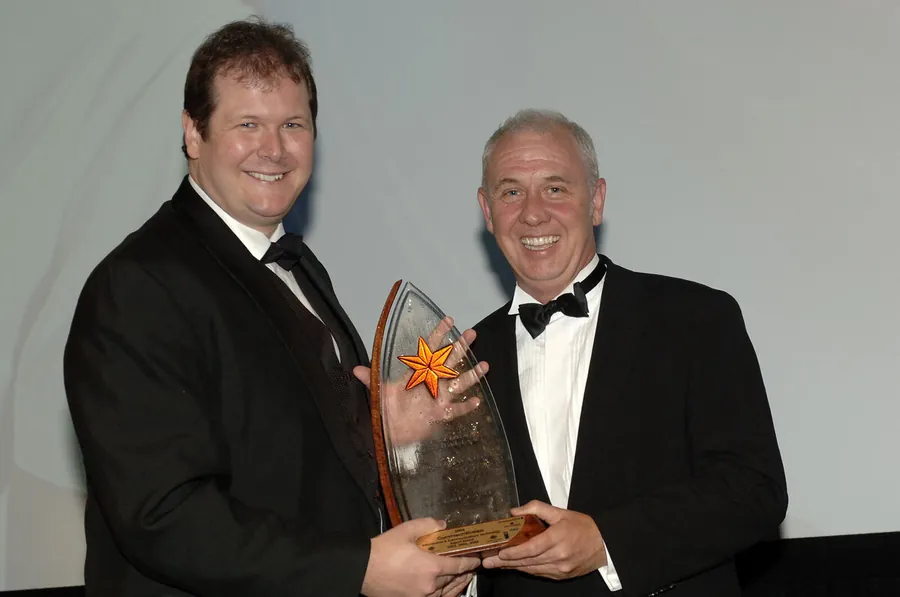
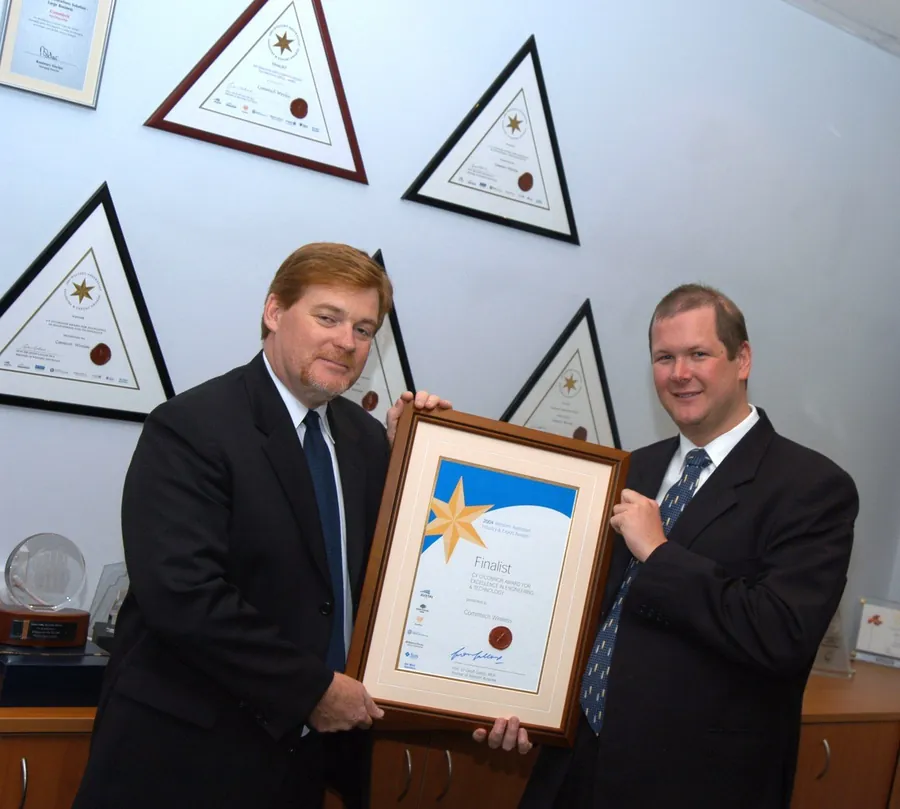
CommtechWireless export-award presentation, mid-2000s.
CommtechWireless · Export Award presentation, mid-2000s.

CommtechWireless

A shed in Mosman Park. Eighteen years later: 53 countries, 8,000 customer sites, the White House and a GFC trade sale.

I founded CommtechWireless in 1992, as a partnership called Commtech Paging Systems. The starting capital was twenty-four thousand dollars saved up while I was still at Austco. After a photocopier, a couple of PCs, a print run of brochures and a phone line, the balance was down to a little over five thousand two hundred — which I figured would last me a year if I drew a hundred dollars a week. The office was a nine-square-metre shed at the back of a friend’s house in Mosman Park. In the peak of summer it hit forty-five degrees by the middle of the day. My brother Mike charged me fifty dollars a week board; I lived on the other fifty.

The thesis was simple. Hospitals had nurse-call systems and patient-monitoring systems and fire-alarm systems and security systems — and casinos had slot-machines and surveillance and incident-response systems — and none of them spoke to each other. None of them spoke to the people who needed the information. We built the middleware. The platform was BASEPage — the world’s first PC-based wireless-messaging system — and after twelve months of hundred-hour weeks (and, on my own admission, twenty kilograms lost) it shipped in 1995. The first sale went to Telecom New Zealand. Within a year, every public hospital in New Zealand was running it.

The company was incorporated in 1994. Zane Lewis joined the business in 1996. Moira Morrison — my first employee — came on board a few months later. In 1999 we renamed CommtechWireless. By 1998 we’d won an AusIndustry R&D Start Grant of $1.6m. By 2001 Zane had relocated to Jacksonville to open the US office. By 2002, Zane and I had set up Keteli (Hong Kong) and taken a fifty-percent stake in our Chinese manufacturing partner, K2 Wireless.

A story worth telling —

40 Under 40 · First Amongst Equals · 2003

Nathan Buzza accepting the 40 Under 40 First Amongst Equals plaque on stage at the 2003 WA Business News awards, flanked by event hosts.

In October 2003, WA Business News named me the overall winner of its 40 Under 40 programme — First Amongst Equals for that year. The award went out to the entrepreneur judged to have made the largest contribution to Western Australian business under the age of forty. The category had run for three years; I was the third recipient. It put CommtechWireless on the cover of the magazine, on the front of WA business sections, and into the public conversation in a way that no amount of paid coverage could have arranged.

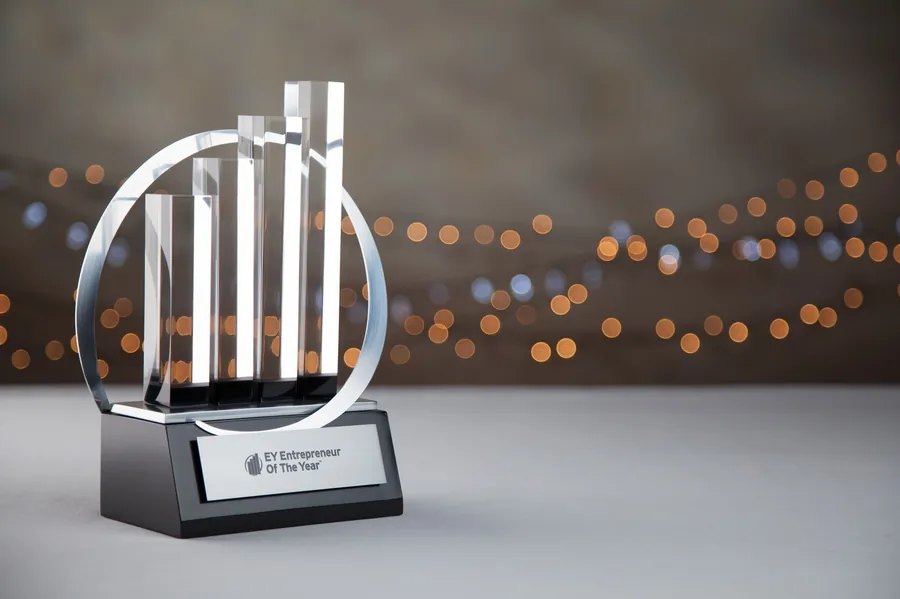
An Ernst & Young Entrepreneur of the Year crystal trophy on a black plinth, against a bokeh-lit backdrop.
EY Entrepreneur of the Year logo.

In 2005, CommtechWireless was named Telstra & Australian Government Small Business of the Year at the Telstra Small Business Awards, and I was named the EY Entrepreneur of the Year for Western Australia in the Technology, Communications, E-Commerce & Life Sciences category. It was the year the shed-in-Mosman-Park story stopped being a story about a kid in a shed and started being a story about Australian medical communications going global. Most of the credit for it sat with the team. They turned a piece of software written on a 1995 R&D budget into a platform deployed in fifty-three countries.

“Always hire on intellect and enthusiasm. Everything else can be learnt.”
— Edmund Buzza, my father. One of the things he taught me — the one that’s stuck longest.
A story worth telling —

The White House motorcade · 2007

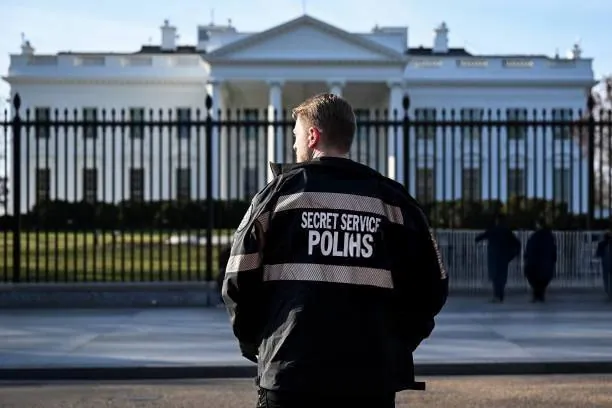
A United States Secret Service officer standing post outside the North Lawn of the White House.
United States Secret Service star badge.

In 2007 the White House Communications Agency placed a USD $1.1m order with CommtechWireless for a presidential-duress platform deployed across the motorcade and across White House grounds. The brief was unforgiving: secure wireless, never-fail delivery, under conditions of active jamming and arbitrary load. We delivered. The work alongside the United States Secret Service taught us things about secure wireless under pressure that fed directly back into the medical-grade platform — and, a decade later, into the firmware standards that now run beneath Illuminati Magic.

A story worth telling —

Erie County emergency dispatch

ERIE COUNTY EMERGENCY SERVICES

Erie County’s emergency-services team ran one of our larger US deployments: a CommtechWireless platform integrating fire dispatch, EMS paging and inter-agency messaging across the county. The deployment sat in the same family of work as the NSW Rural Fire Service and the Saudi Ministry of Health — mission-critical wireless messaging where a missed page is not an inconvenience. Erie County stayed with us until the trade sale, and the system, in its rolled-up form, is still in use today.

By the numbers, at exit

53 countries · ~8,000 customer sites · eight office locations

Offices across Perth, Sydney, Jacksonville, Boca Raton, Hong Kong, Shenzhen, Vejle (Denmark), and London. Headline customers: Mayo Clinic, Cleveland Clinic, Saudi Ministry of Health, Wynn Macau, the US Army / Navy / Air Force, FAO Schwarz New York, the NSW Rural Fire Service, Bumrungrad Hospital Thailand (the first export, in 1996, then the largest hospital in the Southern Hemisphere), the Mulia Hotel Jakarta, and the President of the United States — a duress platform delivered for the White House Communications Agency in 2007.

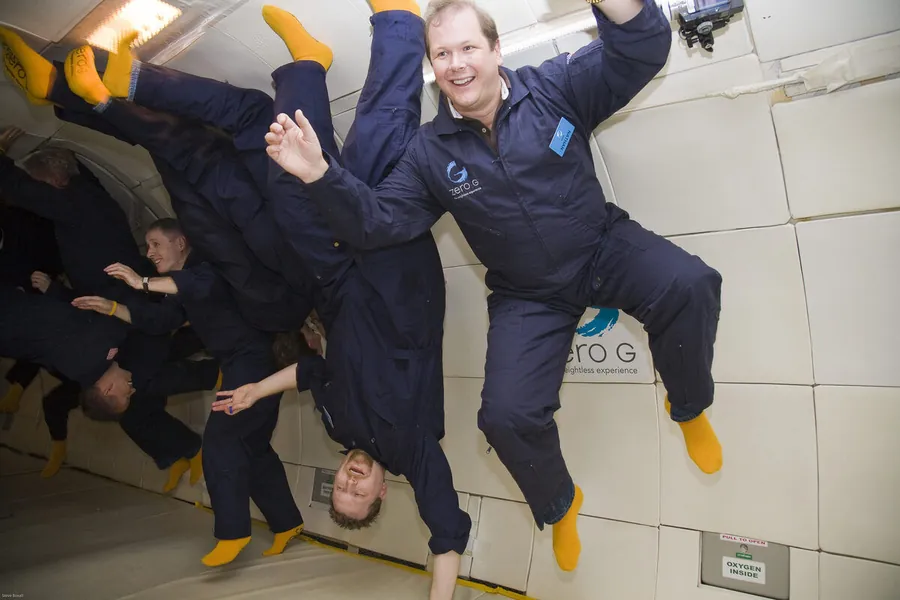
Nathan Buzza on a Zero-G parabolic flight, Cape Canaveral, 2009.
Zero gravity over the Atlantic, on a parabolic flight from Cape Canaveral — a 39th-birthday present in 2009, three years before the family came home from Florida.

In 2007 we moved the family to Jacksonville, Florida. Trudi and I and the boys flew out on Christmas Eve. The flight was overbooked and cancelled. Our VP of Operations was on the phone to the FBI the same afternoon: the FBI had been calling our Florida office for two hours, asking about “Nathan and Trudi Buzza” on a cancelled flight to JFK. We were not, as it turned out, terrorists.

In October 2008 — three weeks into the global financial crisis, with twenty-two investment banks newly underwater — we sold the business to Amcom Software. The funding came from CIBC, a Canadian bank that was, miraculously, still answering its phone. The cheque didn’t bounce. I stayed on as General Manager for eighteen months post-acquisition. In 2011, Amcom was rolled into USA Mobility (now Spok) for AUD $163.8m.

Alcidion logo
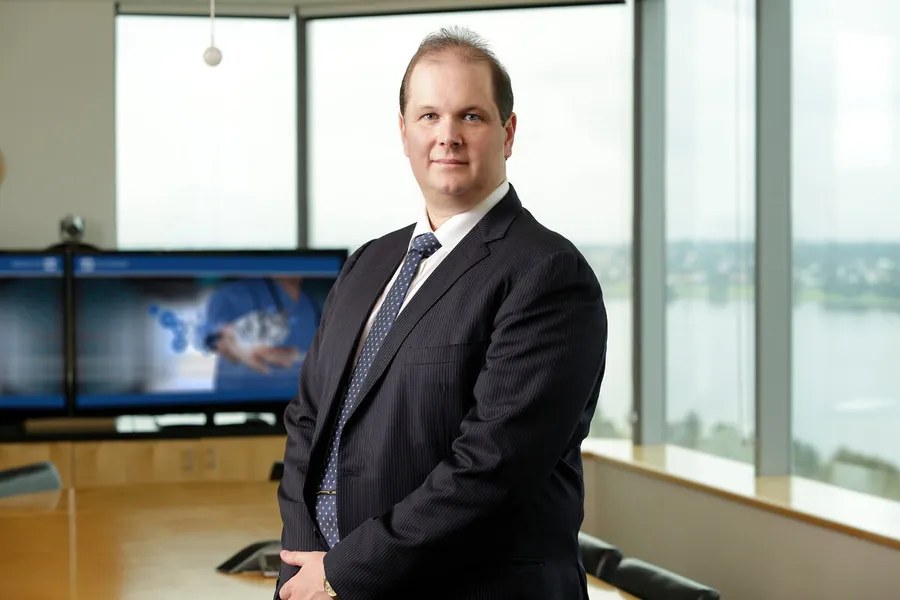
Nathan Buzza in a boardroom with the Alcidion clinical-imaging display behind him, Alcidion era.
Portrait during the Alcidion years — clinical-imaging display in the background was a Miya production deployment.

Alcidion

A reverse takeover, a clinical decision-support platform, and three Western Health hospitals in Footscray, Sunshine and Williamstown.

Alcidion had been built quietly in Adelaide over a decade by Professor Malcolm Pradhan (PhD Stanford, Medical Informatics) and Ray Blight (former CEO of the SA Health Commission). Their platform — Miya — was a clinical decision-support system surfacing real-time risk to the clinicians who could act on it. Sepsis, deterioration, falls. The right information, to the right person, at the right moment. The thesis that had run through my career was sitting on the other side of the table with a working product and a customer list.

In August 2015 we announced a reverse takeover of Naracoota Resources Limited (ASX:NRR) to list Alcidion on the ASX. Allure Capital led the deal alongside BlueSky Private Equity (ASX:BLA) and Patersons Securities. The structure was twelve million dollars in initial scrip, plus two further four-million-dollar tranches contingent on revenue milestones. Alcidion was deployed live at Western Health hospitals — Footscray, Sunshine, Williamstown — before the listing completed.

The reverse listing completed in December 2015. Alcidion has traded as ALC on the ASX ever since. I served as Executive Director through 2017, when I stepped down to focus on the next thesis.

ResApp Health logo
Professional landscape portrait of Nathan Buzza.
Portrait, ResApp era — the first company where the core IP was an algorithm rather than an architecture.

ResApp Health

A thirty-second cough, a smartphone microphone, a clinical-grade respiratory diagnosis — and a $180m Pfizer acquisition.

ResApp Health was built around technology developed by Associate Professor Udantha Abeyratne at the University of Queensland. The model listens to thirty seconds of a patient’s cough, recorded by an ordinary smartphone microphone, and tells you — with clinical-grade accuracy — what’s wrong with their respiratory system. No spirometer. No accessory. No hardware beyond a phone they already own.

I joined the board as Non-Executive Director in December 2017. It was the first company I’d worked with where the core IP was not architecture or workflow but an algorithm — a model trained on labelled audio. The products were ResAppDx (paediatric respiratory diagnosis) and SleepCheck (consumer sleep-apnoea screening). I stepped down from the board in March 2020 to focus on Allure Capital portfolio work and other obligations.

Pfizer scheme of arrangement · 2022

From A$0.115 to A$0.208 per share. Final consideration: AUD $180m.

Pfizer announced an intention to acquire ResApp in April 2022, beginning at A$0.115 per share. After strong COVID-19 cough-detection results were released through the diligence period, the scheme consideration was revised upward — first to A$0.146, then to a final A$0.208 per share, valuing ResApp at approximately AUD $180 million. The scheme was approved by 83% of shareholders, cleared by the ACCC, and implemented in August 2022.

The algorithm-first thesis was the cleanest version of the principle I’d been chasing since CommtechWireless: get the right information to the clinician at the right moment. The information was now generated rather than just routed. The route was a phone any clinician already had.

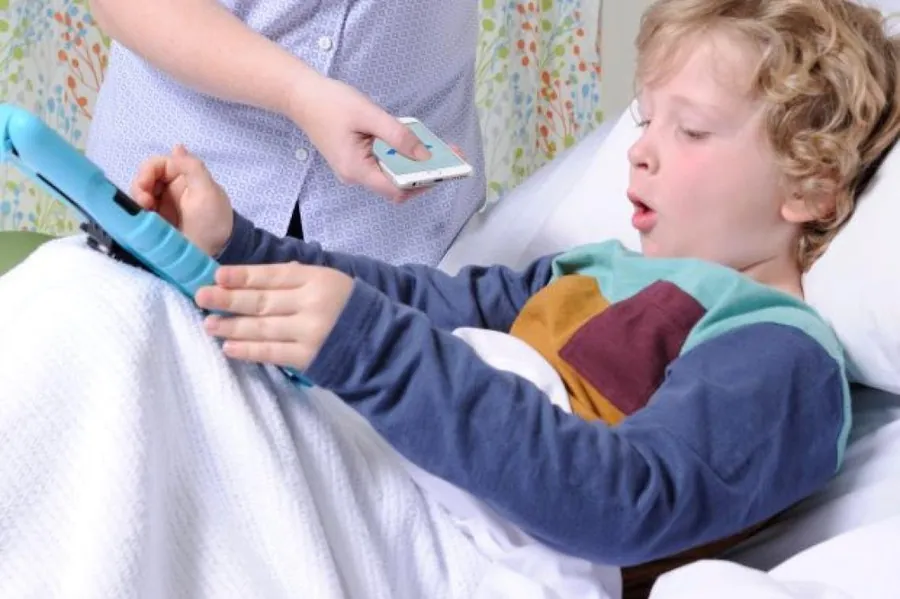
A young patient in a hospital bed coughs while a clinician records the cough on a smartphone running ResAppDx.
ResAppDx in clinical use — a thirty-second cough recorded on the clinician’s phone, no spirometer, no accessory.
Allure Capital logo
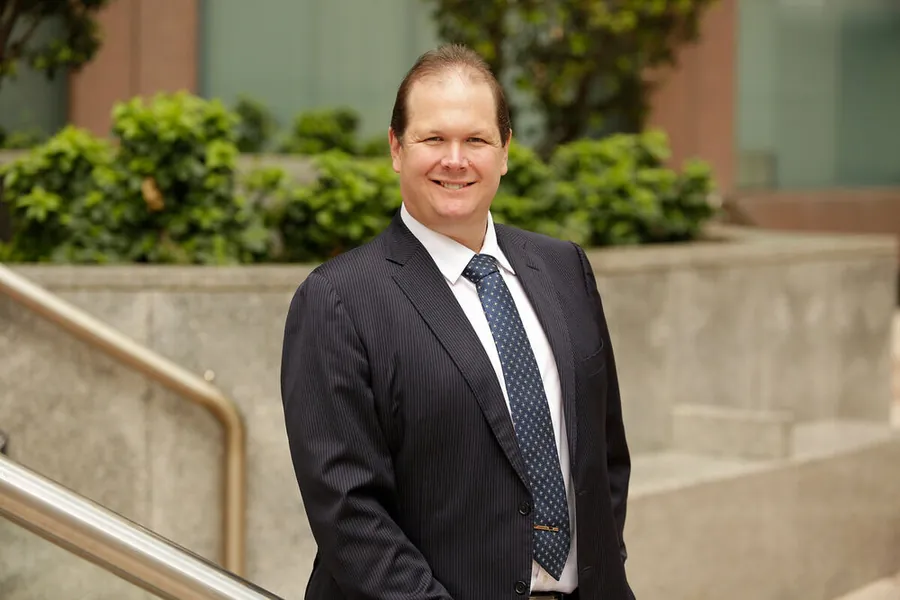
Nathan Buzza outdoor portrait, Perth.
Perth — back home, building Allure Capital.

Allure Capital

Doing, with my own money, the kind of investing I’d wanted done for me twenty years earlier.

I founded Allure Capital after the CommtechWireless trade sale. The thesis was specific: a boutique family-office vehicle, my own capital, focused on healthcare-software and medical-device businesses with capable management, a deployed platform, a credible exit path inside thirty-six months. Seven criteria, all non-negotiable. Roughly a hundred proposals reviewed since founding.

The vehicles that have made it through: Azure Healthcare (ASX:AZV), where Allure built a 10% stake and exited as the share price moved through the mid-30s; Alcidion (ASX:ALC), the RTO described above; ResApp Health (ASX:RAP), acquired by Pfizer; advisory positions at NiQ Health; seed positions including Halo Medical Devices; and a General Partner role in Future Health.

The deeper account — criteria, the portfolio companies, and the combined family stock allocation by percentage — sits on the Active Investments and Passive Portfolio pages.

Why magic?

It’s the question I get asked most often. So before the chapter on Illuminati Magic, the chapter on why there’s an Illuminati Magic at all.

I came back to magic by accident. CommtechWireless had sold — trade-sale to Amcom in October 2008, three weeks into the GFC — and after eighteen months of post-acquisition handover I’d brought the family back from Jacksonville to Perth. I was supposed to be retired. Ethan was barely two; Lachlan was newborn. I had time on my hands for the first time in twenty years and no idea what to do with it.

What I did was watch television. One evening I saw David Blaine performing the trick the magicians call “card to impossible location” on Harrison Ford. If you haven’t seen the clip, the short version is: Ford picks a card, the card vanishes, Blaine sends him to look in a piece of fruit on the kitchen counter, Ford cuts it open, and the card he picked is folded inside. What I actually remember — what wouldn’t leave me — was Ford’s reaction. A sixty-something Hollywood leading man, on his own kitchen island, swearing in genuine disbelief at a man holding nothing.

I wanted to do that to my son. So I started buying tricks. Then I started understanding them. Then I started taking them apart — the way I’d spent thirty years taking apart pagers and clinical workflows and embedded firmware. I read the literature. I joined the Academy of Magical Arts at the Magic Castle. I visited the Castle for the first time and watched men who had given forty years to a single eight-minute act work on the second decimal of their misdirection, and I understood I was among my own. They were engineers in a different medium.

The discipline I’d held my clinical systems to is the same discipline a working magician holds his method to. A pager that fails in a hospital ward kills someone. A method that fails on stage kills a career, a credibility, a livelihood. Both have to be engineered to the standard of never, not the standard of almost never. The audience is different; the bandwidth is identical.

By 2017 it was obvious there was a platform missing — the electronics, firmware and software that working professional magicians needed and that nobody else was going to build. So I built it. That became Illuminati Magic. The motorcade work for the Secret Service had given me what I needed to know about secure wireless under load. The CommtechWireless years had given me the manufacturing playbook. The seventeen-year-old who’d written Q-Zar in Turbo Pascal — the kid I’d almost forgotten about — he was still in there too. It turned out he was the one I’d been saving for last.

If my two sons ever do ask me what their father’s work was for, I’d like to be able to point to one company that wasn’t built to be sold.

Illuminati Magic ornamental mark in gold.

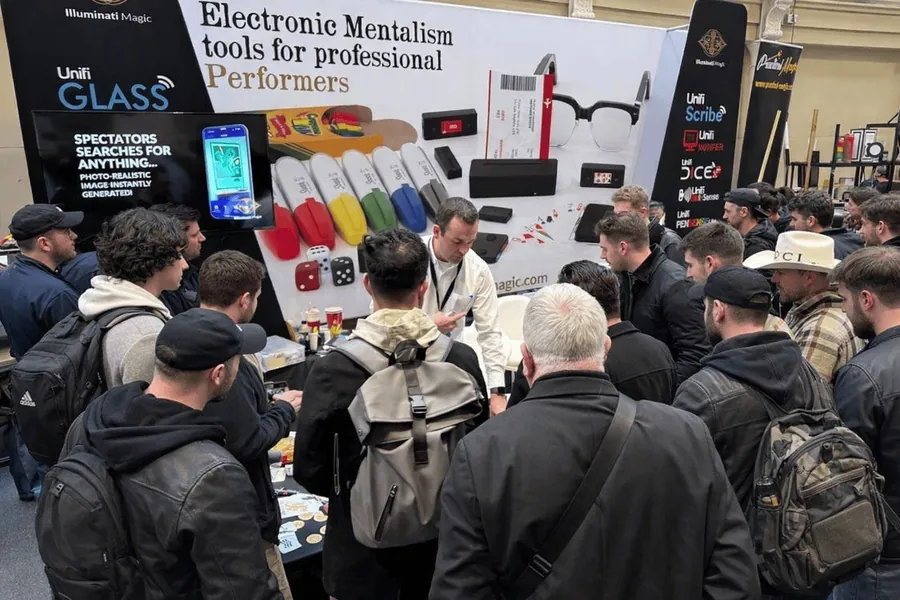
Illuminati Magic

Electronic mentalism — serving the working professional.

I founded Illuminati Magic in 2017. The thesis was almost embarrassingly familiar by then: the working professional mentalist had been served for decades by an industry of one-off prop-makers, with no real platform underneath the tools and no shared infrastructure between them. The customer is the person on stage in front of two hundred people who cannot afford a method to fail. Build the platform.

The principle — one consolidated architecture, designed for the seam where the performer meets the audience — is exactly the principle that ran through CommtechWireless thirty years ago. The customers are different. The architecture is the same.

A real, distributed business

Perth head office · engineering teams in India · partners across Europe and the United States.

Illuminati Magic is not a hobby or a one-person operation. The Perth office holds product direction, commercial relationships and customer support. Engineering is distributed across multiple disciplines and based in India. European partners feed the R&D pipeline directly. The dealer and reseller network spans North America, the UK, Continental Europe, the Middle East, and Asia-Pacific. We supply some of the world’s leading working mentalists.

Out of respect for the performers who rely on the work, no method, product, or platform is discussed in public. The discipline of method-secrecy is itself a craft — one I take as seriously as the standard I held every CommtechWireless hospital deployment to. What an audience sees is impossible; what is underneath it is engineering. Both have to hold.

I’m a member of the Academy of Magical Arts at the Magic Castle in Hollywood, and of the International Brotherhood of Magicians, the American Society of Magicians, and the Western Australian Society of Magicians. None of the memberships earn the business its place — the work does. But the rooms they put you in are useful, and the standard of the work that gets done in those rooms is hard to overstate.

The rooms it puts you in —

Customers and conversations.

A short, deliberately incomplete sample of the people the work has put us in a room with over the years — some as customers, some as friends of the firm, all as working professionals at the top of the craft.

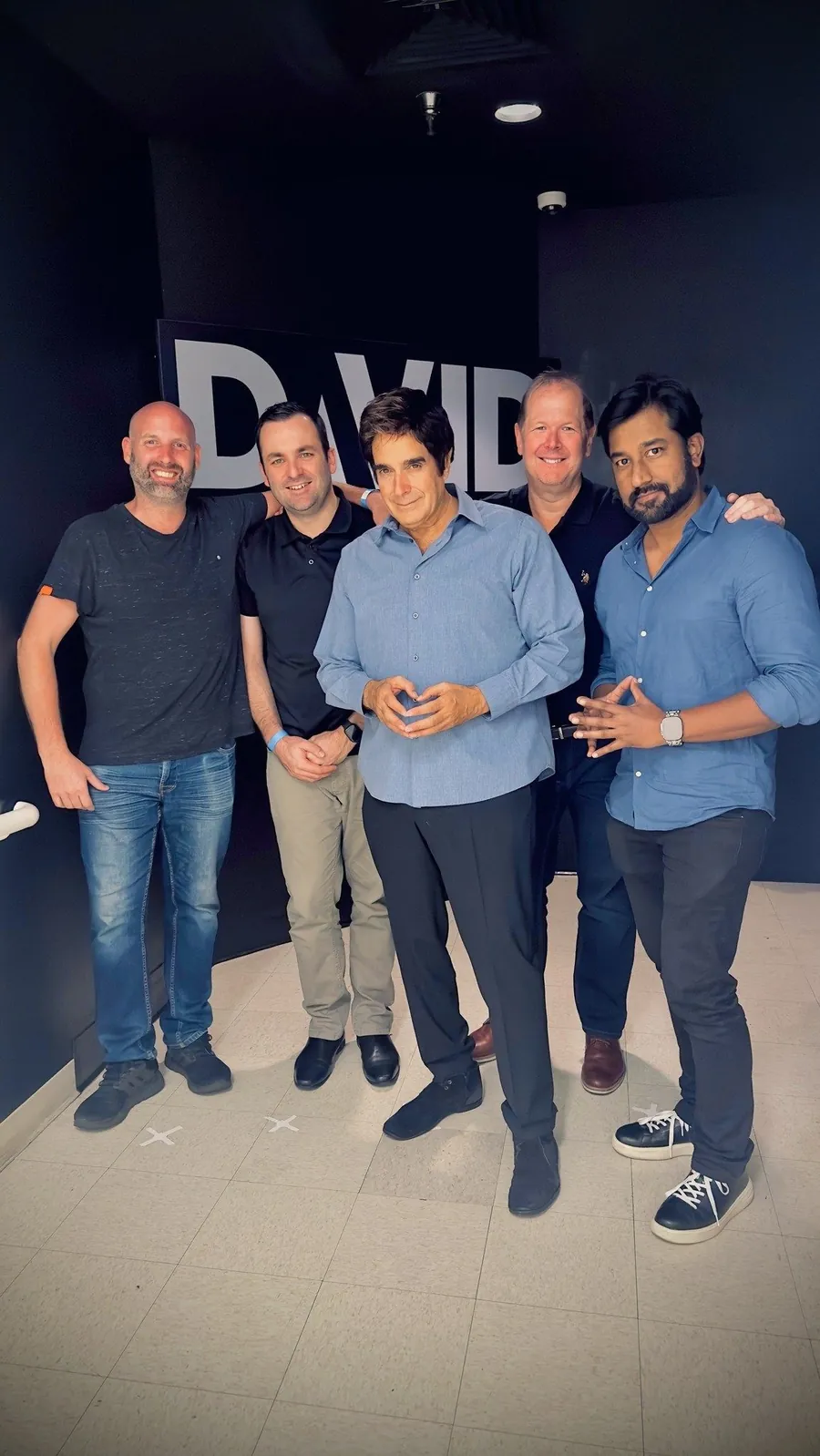
The Illuminati Magic team with David Copperfield at his Las Vegas studio.
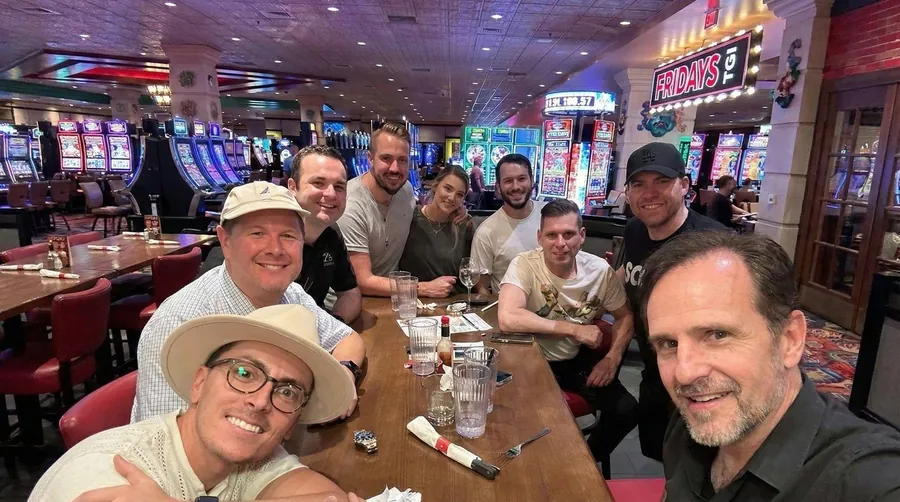
Nathan Buzza with the Illuminati Magic team and partners over dinner at a Las Vegas casino restaurant.

Left: with David Copperfield, at his Las Vegas studio.  Right: between sessions of a Las Vegas magic convention.

Nathan Buzza with the Illuminati Magic team and partners over dinner at a Las Vegas casino restaurant.
Dinner with the Illuminati Magic team and partners between sessions of a Las Vegas magic convention.

Illuminati Magic is also — deliberately — the last business I expect to be running. Magic, taken seriously, is the closest art I know to engineering. R&D on a new effect is structurally identical to R&D on a piece of medical-grade firmware: you iterate, you instrument, you watch what the audience does with their eyes, and you tighten the seam until the seam disappears. The horizon is indefinite. Ethan and Lachlan have been around the workshop their entire lives; what they choose to do with any of it later is theirs alone. The business is being built so it doesn’t depend on either of those answers.